
Launch figures and tables#
This is the generated visual system for Noema’s launch demonstration. Figures F0–F5 and tables
T0–T2 derive from the repository-root launch_evidence.json; none is a
second source of experimental truth. They are documentation and launch assets only. Selecting any
of them for the paper remains a later editorial decision after manuscript review.
Regenerate and verify the complete set with:
uv run --frozen python tools/generate_launch_evidence.py --check
uv run --frozen python tools/generate_launch_assets.py
uv run --frozen python tools/generate_launch_assets.py --check
The machine-readable asset inventory is
docs/_static/launch/manifest.json. Every quantitative figure and
table carries the experimental disclosure or an adjacent note, uses observed min/max terminology,
and preserves the calibrated oracle’s diagnostic-reference role.
Figures required — F0–F5#
F0 · Launch hero#
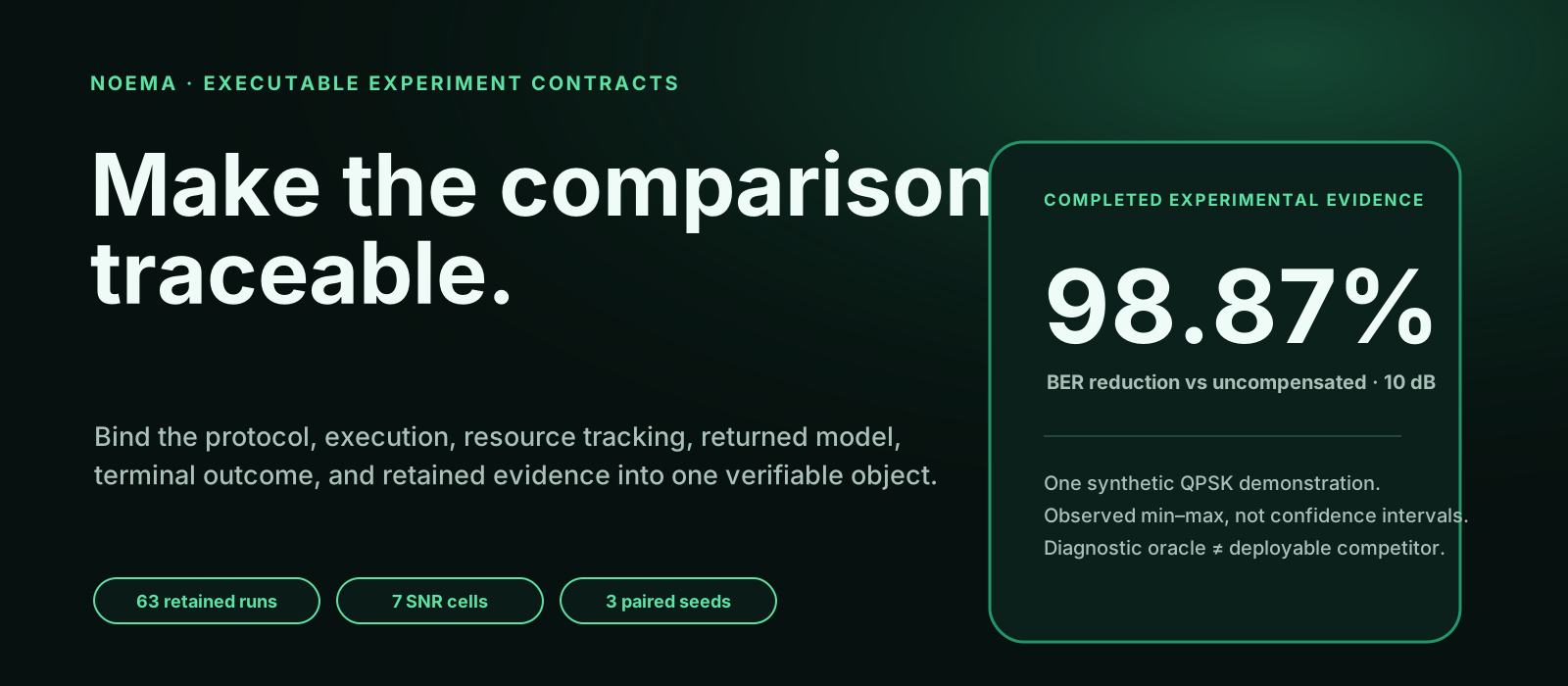
The repository and webpage hero. It combines the product thesis with a bounded evidence card.#
F1 · Comparison anatomy#
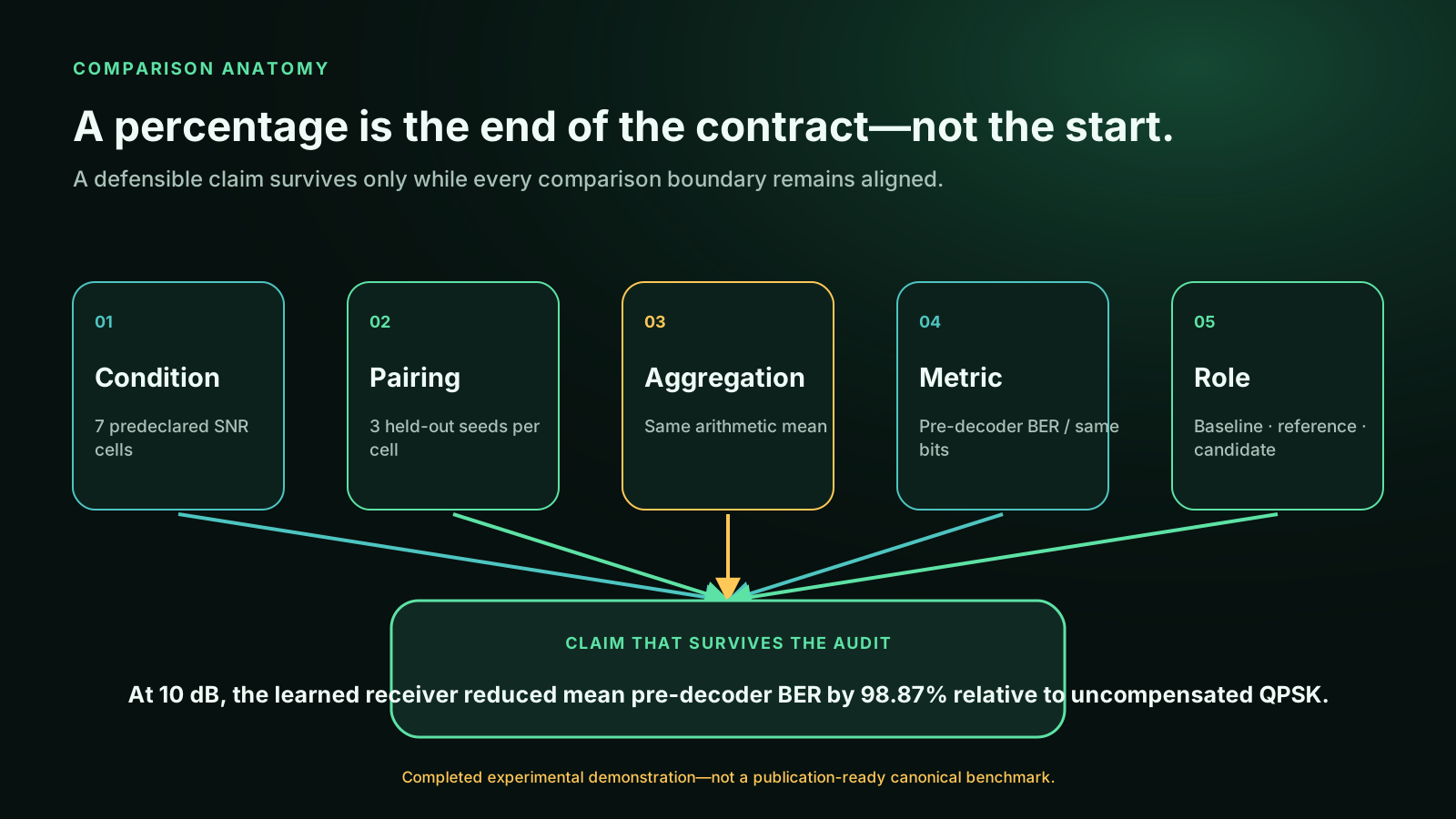
The minimum visual explanation of why the surrounding contract matters more than a percentage.#
F2 · Contract-to-evidence chain#
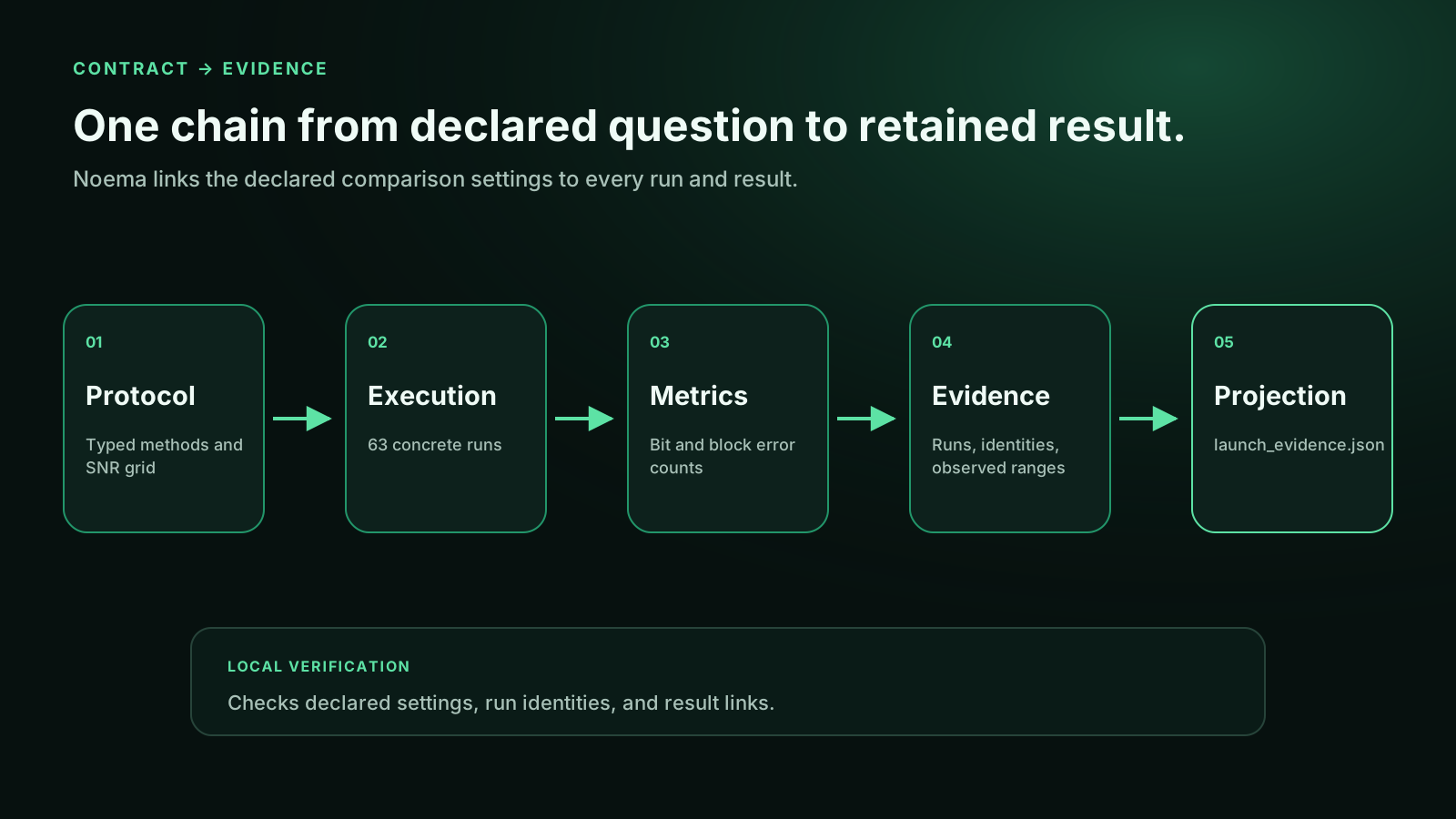
The system figure for documentation, talks, and the future launch video.#
F3 · Canonical experiment figure#
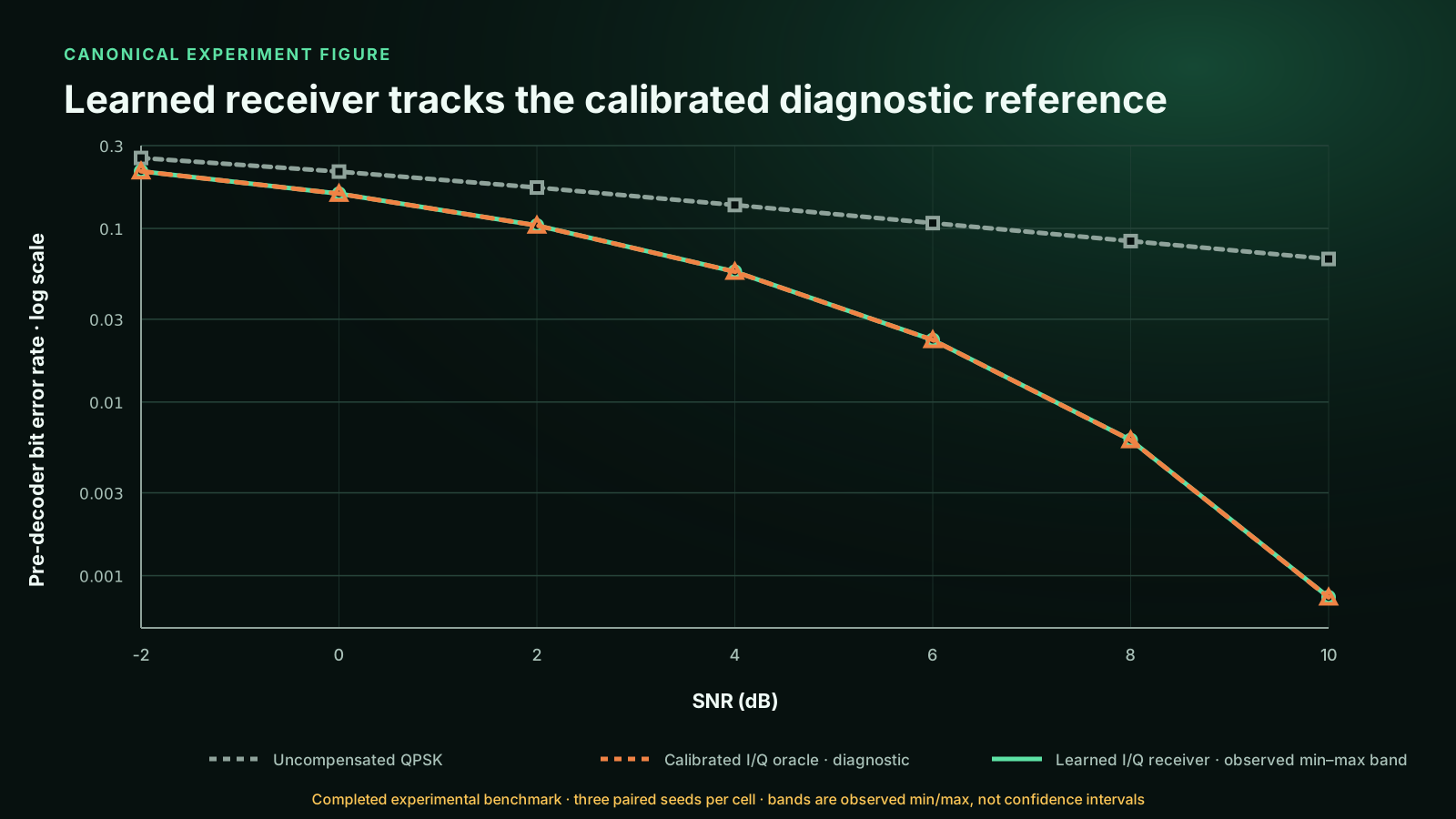
The canonical launch result. Its band is the observed minimum and maximum across three paired held-out seeds—not a confidence interval.#
F4 · Break the comparison#
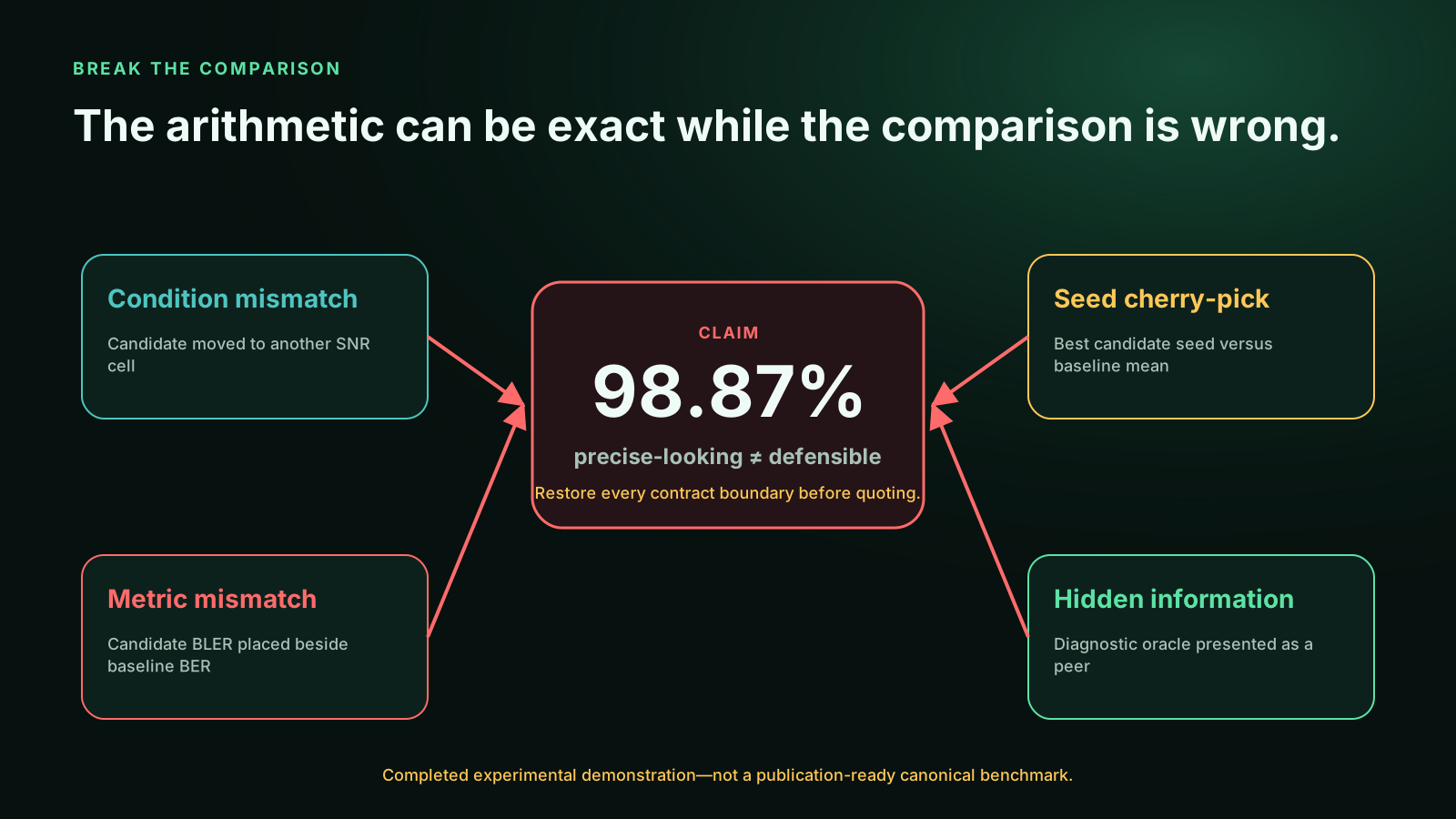
The static companion to the interactive flagship demo.#
F5 · One source, many public outputs#
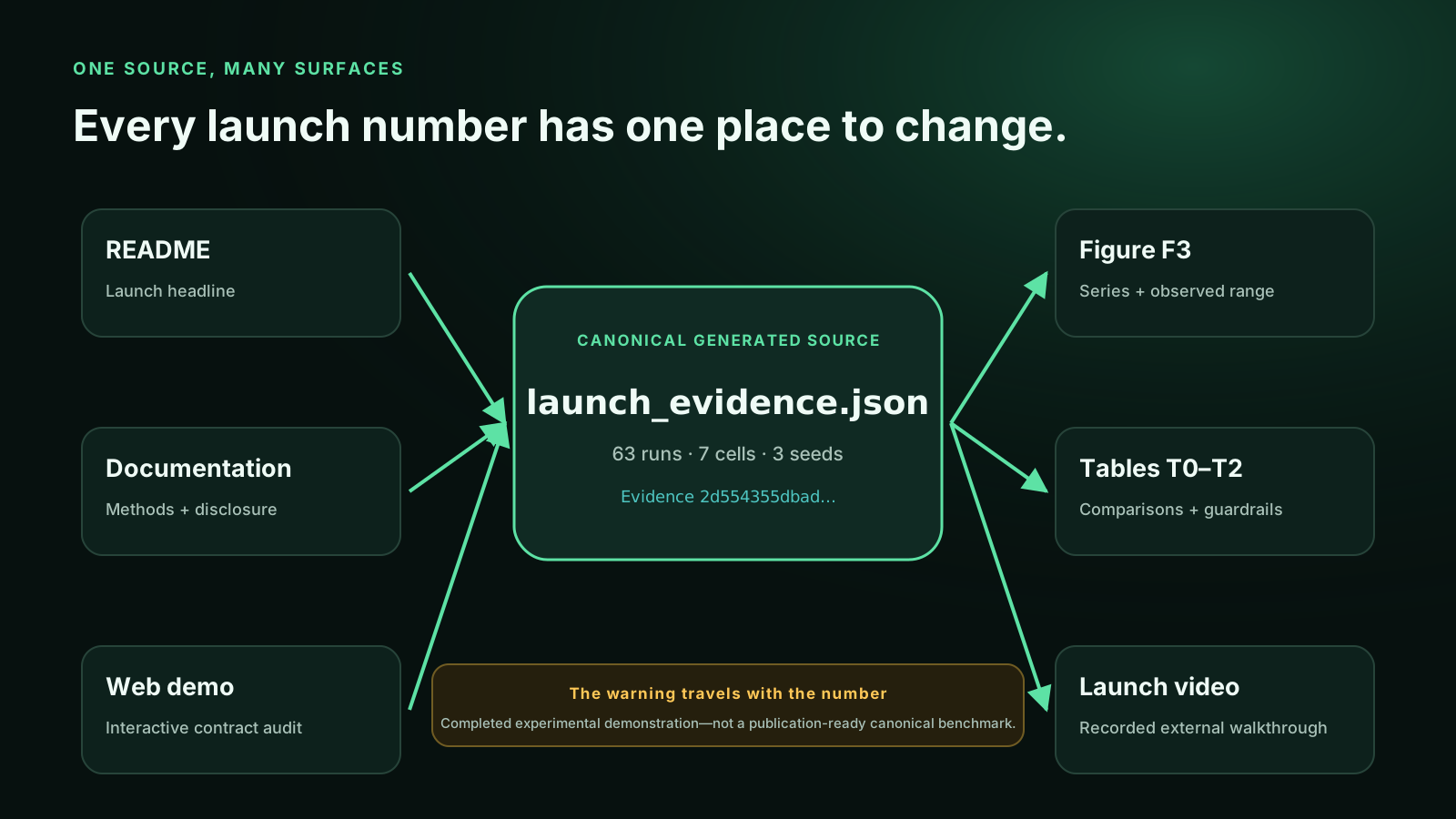
The launch-production rule: every displayed number and warning comes from one generated source.#
Tables required — T0–T2#
CSV is the transport format; Markdown is the human-readable projection rendered below.
T0 · Paired BER result summary#
SNR (dB) |
Uncompensated mean BER |
Calibrated-reference mean BER |
Learned mean BER |
Learned observed min BER |
Learned observed max BER |
Reduction vs uncompensated |
Relative gap to reference |
|---|---|---|---|---|---|---|---|
-2 |
2.545430e-01 |
2.133725e-01 |
2.133560e-01 |
2.129402e-01 |
2.136230e-01 |
16.18% |
-0.01% |
0 |
2.124840e-01 |
1.585229e-01 |
1.585404e-01 |
1.582680e-01 |
1.587467e-01 |
25.39% |
0.01% |
2 |
1.720336e-01 |
1.039540e-01 |
1.039718e-01 |
1.035652e-01 |
1.042442e-01 |
39.56% |
0.02% |
4 |
1.364164e-01 |
5.634212e-02 |
5.636883e-02 |
5.608177e-02 |
5.659771e-02 |
58.68% |
0.05% |
6 |
1.073624e-01 |
2.278264e-02 |
2.278582e-02 |
2.270508e-02 |
2.294254e-02 |
78.78% |
0.01% |
8 |
8.453814e-02 |
6.036758e-03 |
6.040891e-03 |
5.994797e-03 |
6.095886e-03 |
92.85% |
0.07% |
10 |
6.670666e-02 |
7.495880e-04 |
7.514954e-04 |
7.333755e-04 |
7.810593e-04 |
98.87% |
0.25% |
Observed minima and maxima span three paired held-out seeds; they are not confidence intervals. The calibrated reference has diagnostic calibration knowledge. Completed experimental demonstration—not a publication-ready canonical benchmark.
T1 · Experiment contract summary#
Contract field |
Declared value |
Evidence path |
|---|---|---|
Experiment |
Learned QPSK Receiver Calibration |
identity.title |
Result status |
completed |
identity.result_status |
Methods and roles |
Uncompensated QPSK (baseline); Calibrated I/Q oracle (reference); Learned I/Q receiver (candidate) |
design.methods |
SNR cells (dB) |
-2, 0, 2, 4, 6, 8, 10 |
design.snr_db |
Paired seeds |
71001, 72001, 73001 |
design.paired_seeds |
Retained runs |
63 |
design.run_count |
Compared bits per run |
1,048,576 |
design.bits_per_run |
Aggregation |
arithmetic_mean_across_paired_seeds |
scientific_status.aggregation |
Statistical unit |
paired held-out seed within a predeclared SNR cell |
design.statistical_unit |
Uncertainty display |
observed_min_max_not_confidence_interval |
scientific_status.uncertainty_display |
Evidence tier |
completed_experimental_benchmark |
scientific_status.evidence_level |
Publication ready |
false |
scientific_status.publication_ready |
Distribution clearance |
pending_final_review |
distribution_clearance.status |
Reference role |
The calibrated I/Q oracle is a diagnostic reference with calibration knowledge, not a deployable competitor using the same information. |
scientific_status.reference_role |
Distribution clearance and scientific status are independent.
T2 · Launch claim guardrails#
Guardrail |
Required handling |
Evidence path |
|---|---|---|
Primary quantitative wording |
At 10 dB, the learned receiver reduced mean pre-decoder BER by 98.87% relative to uncompensated QPSK. |
headline.text |
Adjacent disclosure |
Completed experimental demonstration—not a publication-ready canonical benchmark. |
scientific_status.disclosure |
Uncertainty language |
Call bands observed minima/maxima; never confidence intervals. |
scientific_status.uncertainty_display |
Reference role |
Describe the calibrated oracle as a diagnostic reference with privileged calibration knowledge. |
scientific_status.reference_role |
Scientific tier |
Do not call the selected benchmark publication-ready. |
scientific_status.publication_ready |
Final release state |
The development repository is public; stable v0.2.0 and the paper bundle remain pending final review. |
distribution_clearance.status |
Numeric source |
Derive displayed values from series, comparisons, or headline. |
consumer_contract.rules |
These guardrails apply to README, documentation, webpage, figures, tables, and video overlays.
Launch video#
The recorded learned QPSK I/Q calibration walkthrough shows the clean installation, training-contract export, dataset capture, external training, returned-model validation, and UI comparison against both declared baselines. The reviewed video is hosted externally; no local recording or edit file is committed to the source repository.
launch_evidence.json records the stable video identity and viewer-facing URLs alongside the
numerical data paths used by the public README, documentation, figures, tables, and demo.